

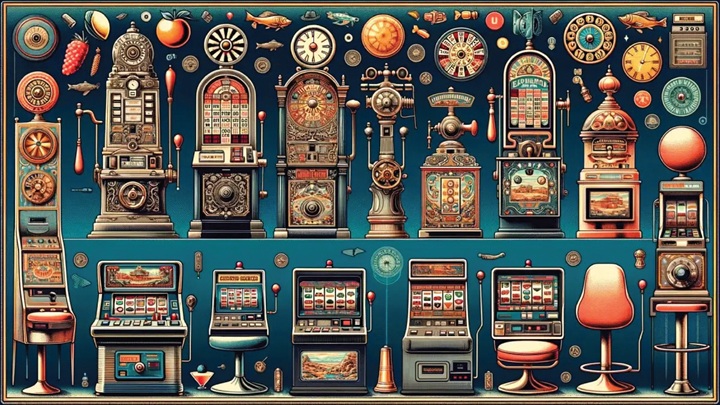
A comprehensive look at how slot innovation, from TITO systems to single-wallet integration, changes the game for both modern gamblers and gaming operators. By Edwin Ford
What started as casual curiosity quickly evolved into a deep virtual dive into the origins, development, and current innovations of the slot machine. This device has entertained the world for over a century.
As I moved through decades of invention, reinvention, and revolution, I discovered that the story of the slot machine is not just one of blinking lights and spinning reels; it's a story about society, technology, and how we chase the thrill of chance. From dusty saloons to sleek mobile apps, the slot machine’s journey mirrors our technological transformation.

1894–1895 – The Birth of the Liberty Bell
My journey began in San Francisco, 1894, where a Bavarian immigrant named Charles Fey was working as a mechanic. Fascinated by games of chance, he devised a machine that could automatically determine and pay out winnings, something no other gaming device at the time could do.
In 1895, his creation became reality: the Liberty Bell, the world's first true slot machine. It featured three spinning reels with five symbols: horseshoes, diamonds, spades, hearts and a Liberty Bell. A line of three bells awarded 50 cents automatically.
This was more than a novelty; it was the birth of a global entertainment genre. For the first time, players had a self-contained, autonomous gambling experience. The simplicity and suspense of watching those reels spin became instantly iconic.

1907–1930s – Fruit Symbols and Legal Loopholes
As I explored the early 20th century, I found an industry adapting to legal pressures. Anti-gambling laws had taken hold across the United States, forcing slot makers to get creative.
In 1907, Chicago-based manufacturer Herbert Mills introduced the Operator Bell, a machine that mimicked Fey’s design but cleverly swapped cash rewards for chewing gum or candy. Symbols changed, too, now featuring fruits like cherries and lemons, along with the iconic BAR symbol, derived from the Bell-Fruit Gum Company's logo.
These machines operated in a legal gray area and quickly became a staple in cigar shops, saloons and bowling alleys. Despite regulation, the public’s appetite for the thrill of the spin endured.

1964–1966 – Electromechanical Breakthroughs
By the 1960s, electricity had found its way into every corner of industry and the slot machine was no exception. In 1964, Bally introduced Money Honey, the first fully electromechanical slot machine.
No longer powered solely by springs and gears, this new generation used electric motors and circuitry to power the reels, lights, and sounds. It also introduced the bottomless hopper, which could automatically pay out up to 500 coins, eliminating the need for constant staff supervision.
By 1966, prototype solid-state machines were emerging. The future was shifting toward electronic complexity and the slot machine was becoming faster, louder, and more immersive.

1976–1986 – The Video Era and Progressive Jackpots
The mid-1970s ushered in a digital revolution. In 1976, a company called Fortune Coin introduced the first video slot machine, using a modified Sony TV screen. This was a game-changer. Developers were no longer confined by mechanical limitations; they could now animate reels, create bonus features and display themed graphics.
It was during this period that five-reel slots emerged, along with multi-line betting, allowing players to wager across several rows and dramatically increasing engagement.
Then, in 1986, the stakes grew higher with the launch of Megabucks by IGT, the world’s first linked progressive jackpot. Players across multiple machines and even multiple casinos could now contribute to a single, escalating prize pool. Suddenly, slot players weren’t just chasing a payout; they were dreaming of millions.
1990s – The Rise of Branded and Cinematic Slots
The 1990s were all about storytelling and spectacle. Slot machines transformed from mere games of chance into interactive entertainment experiences.
Casino floors became awash with branded slot machines, featuring familiar characters, themes, and music. Games like Wheel of Fortune, Monopoly, The Wizard of Oz, Elvis: The King and even Game of Thrones invited players into worlds they already loved, only now, they could spin to win within them.
With digital soundtracks, video clips and immersive bonus rounds, the experience of playing a slot machine was becoming more like watching a movie or playing a video game.

Late 1990s–2005 –Going Online
The late 1990s brought the Internet into homes and it didn’t take long for the casino world to follow. Developers like Microgaming, NetEnt and PlaynGO led the charge, transforming traditional slots into online games accessible via desktop.
I found myself fascinated by how quickly online slots evolved. Games like Starburst, Gonzo’s Quest, and Book of Dead offered crisp graphics, cascading reels, and layered features. Players could log in from anywhere and play instantly, no need for physical tokens or casino floors.
This shift also introduced free spins, loyalty rewards, and bonus rounds that had more in common with video games than traditional gambling.

2000–2010 – TITO Systems and Mobile Gaming
The early 2000s introduced perhaps one of the most transformative changes to physical slot machines: TITO, or Ticket-In, Ticket-Out.
In 2000, IGT conducted a field trial at the Fiesta Casino in Las Vegas. By 2002, the system was rolled out across major resorts like those owned by MGM Mirage. Gone were the days of buckets of coins; now, players received and redeemed barcoded tickets. This not only improved efficiency but also reduced maintenance and helped casinos streamline operations.
Meanwhile, smartphones were entering the mainstream. I vividly remember testing early mobile slots – simple, touch-responsive and intuitive. The potential was obvious and, by the end of the decade, mobile apps had become a dominant force in the industry.

2010s–2020s – Cross-Platform Play and Digital Wallets
As the industry moved deeper into the digital age, the term "slot machine" began to feel almost too limited. Games were now available across desktops, mobile devices, tablets and even smart TVs. Cloud saves and cross-platform syncing meant you could pick up exactly where you left off, whether you were at home or travelling.
More importantly, slot game innovation was becoming personalized. Casinos and online platforms began using AI and data analytics to recommend games, assign bonuses and even tailor promotions based on individual player behaviour.
At the same time, payment systems evolved. Cashless gaming, digital wallets, tap-to-play, and loyalty cards became standard, offering convenience and improving responsibe-gambling tools such as spending limits and time alerts.

2020s – Online and Land-Based Integration
Perhaps the most exciting recent development in my virtual investigation is how online and land-based casino gaming are converging, not competing, but working together.
Slot and Game manufacturers and developers like Light & Wonder, Aristocrat, IGT and Evolution are now designing content for both physical and digital platforms simultaneously. A game launched on a casino floor may have an identical or companion version online, and thanks to unified casino-management systems, players can now operate with a single wallet, sometimes called a “single purse” system.
This innovation means that a player’s account, funds, bonuses and even loyalty rewards are shared across platforms. A single purse system lets you play Book of Ra at a slot machine in Vegas, then pick up again on your mobile app back at the hotel, all from the same account.
For players, this offers unparalleled convenience, continuity, and trust. For operators and regulators, it enhances transparency, accountability and fairness. And it reflects a new era where the industry isn't divided into "online vs. land-based," it’s one ecosystem, unified in its focus on player experience and responsible gaming.
A Timeless Experience Reimagined
From the clunky reels of the Liberty Bell to VR-ready, AI-personalized platforms, the slot machine has evolved in extraordinary ways. Yet, after all my research, I realized one thing remains unchanged: that magical moment when the reels begin to spin.
This journey through time, though entirely virtual, has reshaped how I see the humble slot machine. It's no longer just a game. It’s a living piece of entertainment history, constantly reinventing itself for new generations.
The next chapter? It’s already being written, on our phones, in our casinos and in the cloud.
About Author
 Edwin Ford is a highly motivated, flexible and results-driven senior executive with extensive experience in strategy, sales, business development and commercial operations, developed through over a four-decade career in the gaming industry. Training, working and supervising in casino operations to an executive level , spanning over 15 years, he also operated and was a shareholder of several software-development and supply houses, leading development and deployment of new technologies across international markets.
He displays a skill set transferable to almost any business sector, experienced in consulting with the ability to drive any organisation to realize its goals.
In recent years he has handled licensing applications for several companies with a 100 percent success rate. After 46 years in the industry his passion for the sector is still strong.
*** This article was originally published in Casino Life Magazine Issue 180 September 2025 ***