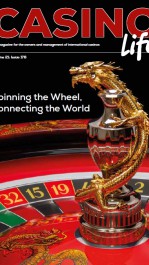


The land of song may have a gambling problem. By Eugene Gerden
The Italian government will consider additional measures aimed at fighting illegal gambling activities in the country in the coming years. In recent years, the Italian gambling sector has significantly expanded from €111.7 billion of overall bets and turnover of the industry in 2021, to over €157 billion in 2024, an increase of 6.5 percent compared to 2023. The largest share was online, with €92 billion. Casino gambling remained stable at €65 billion in 2024.
This year the growth of the industry is ongoing. According to a recent report by Libera, an Italian association that promotes outreach activities and various types of protest action against the Mafia, these are huge figures. They mean that every year Italians gamble away approximately 7.1 percent of the national GDP. For comparison, in 2023 Italy’s public healthcare spending was just over €130 billion, 6.7 percent of GDP.
A Huge Outlay
Most local analysts believe gambling has become a de facto structural component of the Italian economy. According to data collected by Libera, 18 million people in Italy have tried their luck at least once in the last year; 5.5 million are regular gamblers and 1.5 million are now pathological gamblers.
From 2004 to 2024, Italians gambled a total of €1,774 billion, averaging over €88 billion per year. In 1990, the industry totaled just €4.8 billion, while in the last 35 years these figures have significantly increased. The average annual growth rate of 8.7 percent far exceeds the increase in national GDP. The current trend is ongoing, with a single decline in 2020 due to the pandemic, followed by an immediate rebound in 2021 (up 15.5 percent).
In 2024, the state collected €11.5 billion in taxes. This is, however, less than in the past.
Up and down the Boot
In geographical terms, among the centers of gambling in Italy are such provinces a Lombardy, with almost €25 billion. It is followed by Campania (€20.5 billion), Lazio (€16.6 billion), and Sicily (€15.2 billion), with Rome and Milan being leaders in terms of gamblers (among the Italian cities), and their spending.
As the current level of profitability of the industry is steadily growing, that attracts various criminals to the sector. An example is Prato, a city and municipality in Tuscany. It is the capital of the province of Prato which has unofficial status of the capital of illegal gambling of the country.
This is also confirmed by recent data of the Italian Ministry of Internal Affairs, which has discovered 17 illegal gambling halls in the city. These are run primarily by Chinese groups but with the presence of Italian Mafia.
As confirmed by Prosecutor Luca Tescaroli, the phenomenon is “widespread and deeply rooted.” It is a serious problem not only for the city of Prato but also for other Italian cities and provinces, especially those located in the south. Tescaroli alleges that in the existing, illegal gambling halls such games as as Pai Gow and Mah-jong (being especially popular among Chinese) were practiced, “as well as large-scale illegal betting.”

Mob Involvement
According to the Anti-Mafia Investigative Directorate (DIA) and the National Anti-Mafia Directorate (DNA) , between 2010 and 2024, 147 Mafia clans were identified as being involved in the legal and illegal gambling business alike. Sixteen regions were affected, from Campania to Liguria, from Calabria to Piedmont. Gambling has become for the Mafia what the cement business was in the 1980s or the waste business in the 1990s: an inexhaustible mine, capable of generating enormous profits with limited criminal liability.
Currently the most complex situation with illegal gambling is observed in the southern provinces. Campania is the most affected region, with 40 active clans; Calabria follows with 39 and Sicily with 38. At the same time, the situation in the north remains also complex.
According to experts from the DIA, domestic Mafia clans don’t just run betting shops or slot machines.
They control the supply chains of money and technology by installing tampered equipment, as well as creating fake companies to obtain licenses and concessions.
Others infiltrate the online sector, opening “mirror” platforms that imitate legal sites but effectively transfer money flows abroad. In this way, gambling becomes a perfect washing machine: Every day, billions of euros are mixed, moved, laundered and reinvested in seemingly legitimate activities.
*** This article was originally published in Casino Life Magazine Issue 184 January 2026 Edition ***